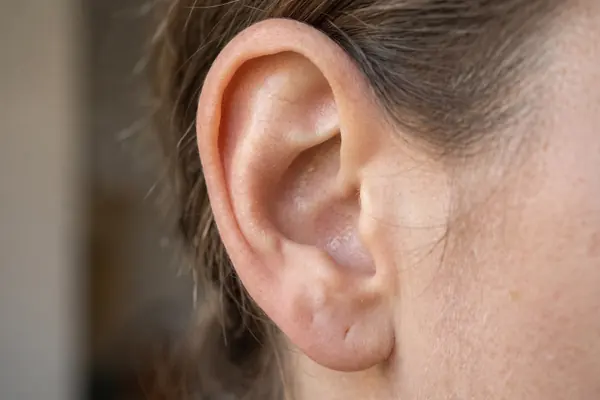
TIMING
Which ear hears it first
A sound from the left reaches the left ear first. The biggest gap, for a sound directly to one side, is only a little over half a millisecond, and the brain reads it.
See the numbers
 doodlephonic
HOW HEARING FINDS DIRECTION
0.68 MS the widest gap
Close your eyes and you can still point at a sound.
Your brain compares what reaches each ear: which one hears it first, which one hears it louder. The folds of the outer ear add clues about height. University teaching texts call these the binaural and monaural cues.
Updated
Place a soundTHE SHORT ANSWER
Timing works best for low sounds,
loudness differences for high ones.
TIMING
A sound from the left reaches the left ear first. The biggest gap, for a sound directly to one side, is only a little over half a millisecond, and the brain reads it.
See the numbersLOUDNESS
High sounds, with short wavelengths, are blocked by the head, so the far ear hears them quieter. Below about 1,000 Hz the sound sweeps round the head and this cue fades.
Place a soundTHE EAR FLAP
The shape of the outer ear filters sound differently depending on its angle. That is how we tell above from below, and everyone's ears do it slightly differently.
Try it yourselfPLACE A SOUND
Pick a sound to see which cue does the work. The bar shows how easily the cues let us place it.
Based on University of Minnesota and Indiana University teaching texts on sound localisation. General information about hearing, not a hearing test.
TWO NUMBERS WORTH KNOWING
The largest timing gap your head allows,
and the smallest one you can notice.
≈ 0.68 ms
Arrival difference, sound directly to one side
With about 23 cm of extra path to the far ear and sound at 340 m/s, the gap is at most about 0.676 milliseconds, a little over half a millisecond.
LARGEST GAP · UMN
10 µs
Timing difference people can detect
With some practice, people can learn to detect a timing difference of 10 to 20 millionths of a second between the ears, a 1956 finding cited by the University of Minnesota text.
SMALLEST GAP · UMN
The two timing signals first meet in the brainstem, in the superior olivary complex. Timing differences stop being useful at about 1,500 Hz, where level differences take over: together this is known as the duplex theory.
FOUR THINGS TO NOTICE

You use these cues all day without thinking. A few everyday moments show them in action.
When a sound is hard to place, a small head turn changes the timing and loudness at each ear and breaks the front-back confusion.
The Indiana primer suggests folding your ear flap over and noticing how much harder it becomes to place sounds.
Deep bass seems to come from everywhere. Below about 200 Hz the cues stop working, so a subwoofer's position matters little.
If the same sound comes from two speakers, you hear it at the nearer one unless the arrivals are within about 35 to 50 ms.
HEARING WITH ONE EAR
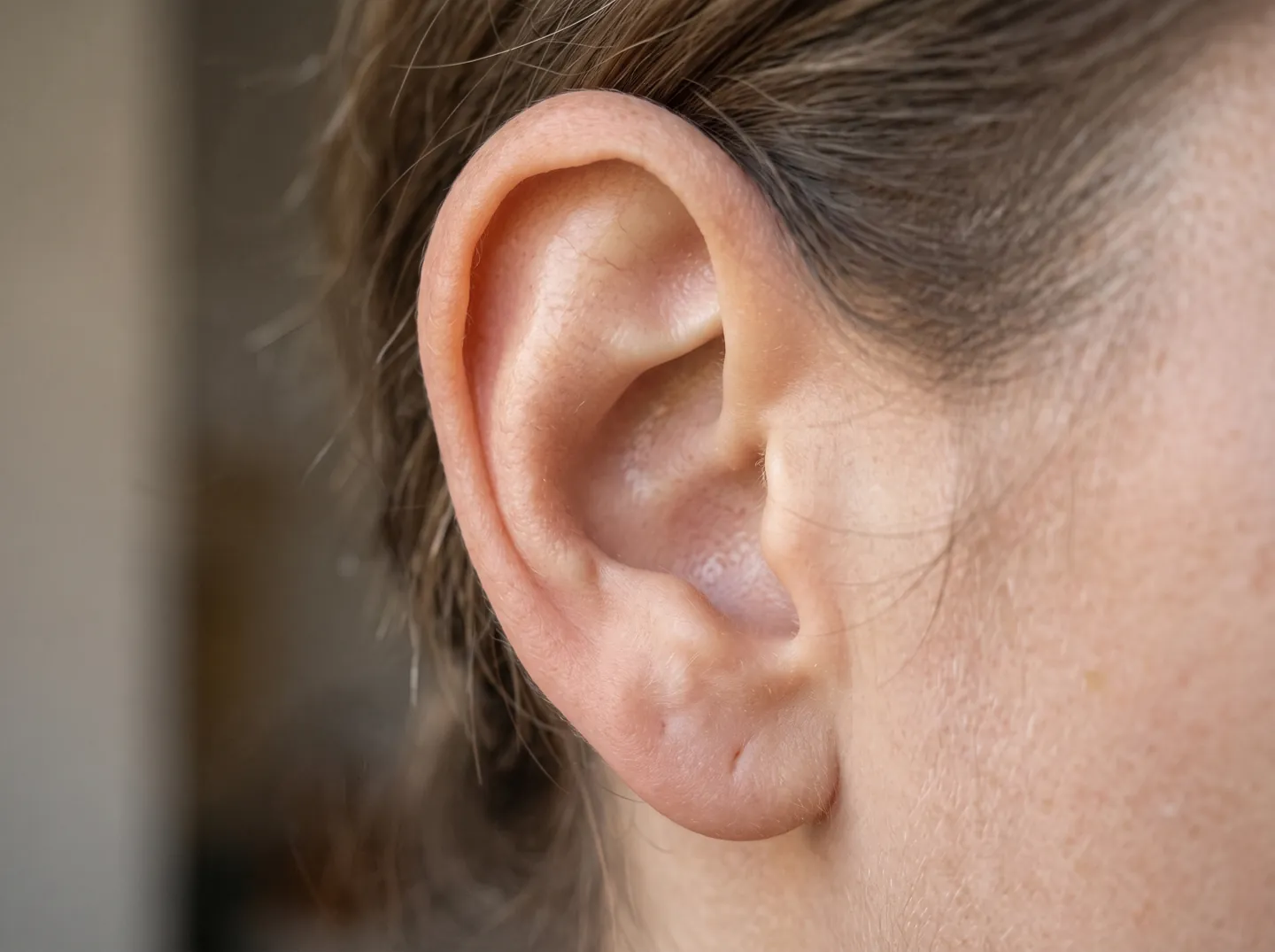
RNID says that with single-sided deafness it can be harder to tell where sounds come from, because the brain uses timing and loudness information from both ears. Crossing the road and following speech in noisy places can become harder.
An audiologist can work through options such as CROS hearing aids or remote microphones, and many people develop their own tactics, like sitting with their hearing ear towards the person speaking.
Questions
The brain compares the two ears: the difference in arrival time and the difference in loudness. The shape of the outer ear adds cues about height.
At most a little over half a millisecond, about 0.68 ms by the University of Minnesota's worked example, for a sound directly to one side.
Low sounds have long wavelengths that pass around the head, so the loudness cue disappears. The Indiana University primer says the cues become ineffective below about 200 Hz.
A set of positions where timing and loudness are the same at both ears, such as directly in front and directly behind. Head movements and the outer ear help resolve it.
Yes. RNID says single-sided deafness can make it harder to tell where sounds come from, because direction relies on information from both ears.
Sources
ABOUT THIS NAME
doodlephonic.com is part of the DoodleSale portfolio. It isn't in an auction right now, but you can ask about leasing it.